


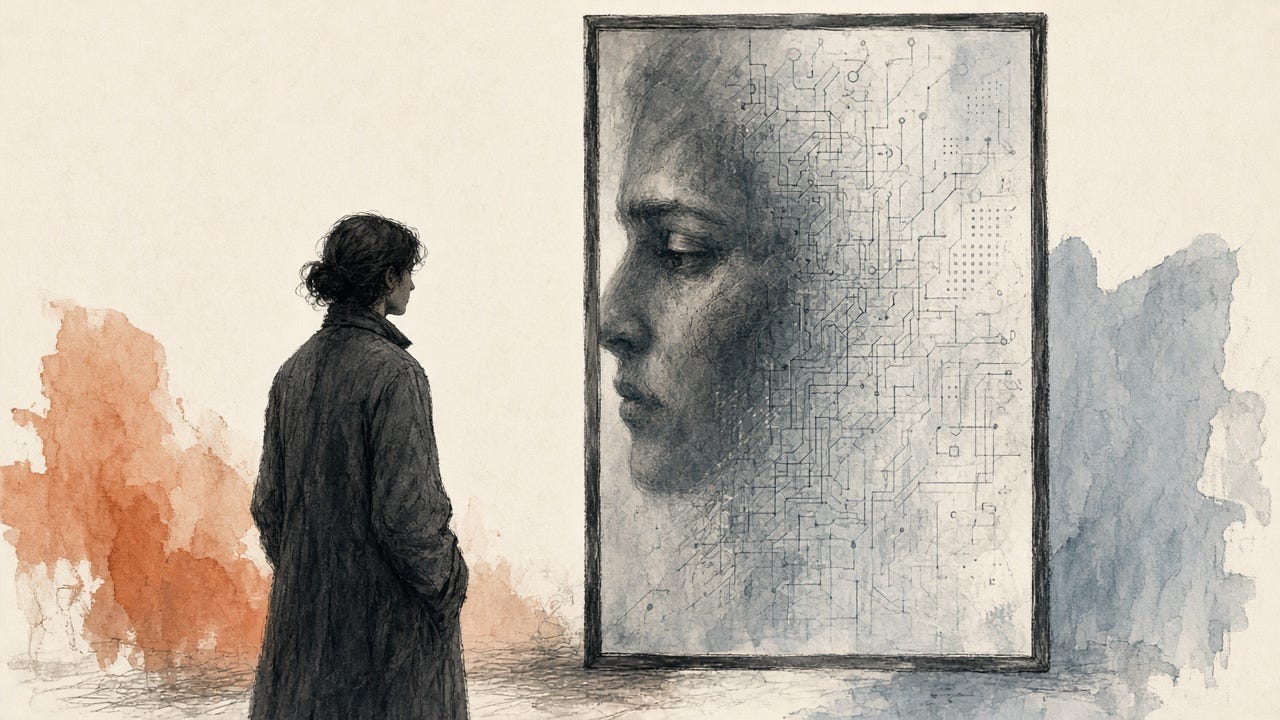
If you’ve listened to a podcast lately, you’ve probably heard someone explain how artificial intelligence is going to change everything. Depending on who’s talking, it will either take your job and destroy civilization or solve nearly every problem we’ve managed to create. That’s quite a range of possibilities for something I recently asked to help me edit an email.
I understand some of the excitement, and I understand some of the concern. AI is powerful, and we’re still learning what it can do. But as I listen to these conversations, I find myself wondering whether we’re paying enough attention to what using it might do to us.
I’m a pastor, so that’s where my mind tends to go. I’m interested in how things work, but I’m also interested in how they shape our hearts. What are we learning to trust? What habits are we developing? Are we becoming more thoughtful and more loving, or just more efficient?
A good deal of what I’ve written here has been political, often because I’ve felt the need to speak truthfully about things that matter. This subject comes from that same concern, though I’m still working through it myself. I don’t have every answer about AI. I use it, and I used it to help edit this article. That seems like something you ought to know before I start offering advice about it.
Still, using a tool doesn’t mean we should stop examining it—or ourselves.
Ecclesiastes tells us there is “nothing new under the sun” (1:9). That doesn’t mean Solomon was anticipating a chatbot. It means the human heart hasn’t changed nearly as much as our inventions have. We still find ways to place too much confidence in things we’ve made. We still want shortcuts, and we still struggle to recognize when something helpful has become something we depend on too much.
AI gives us another opportunity to wrestle with those old questions. Here’s how I’m beginning to think about it.
Remember what it is and who you are
One of the remarkable things about AI is how personal it can sound. It can respond patiently, offer encouragement, and help you put a difficult thought into words. Sometimes its answer sounds wiser than what we’ve heard from actual people. I can see why someone would keep going back to it.
But sounding caring and caring are different things. A chatbot can produce the words of an apology without having anything to repent of. It can explain grief without grieving. It can write a prayer, but it cannot join you in bringing your burdens before the Father.
That distinction matters because the Bible describes human beings as made in God’s image (Genesis 1:27). You are fearfully and wonderfully made (Psalm 139:14). Your worth comes from the God who made you and loves you, and no machine’s ability to imitate your work can take that away.
As a writer, I find that reassuring. It also challenges me. If a machine can produce a polished paragraph, then perhaps I need to remember that the deepest value of my writing was never just its polish. It’s the truth I’m responsible to communicate and the people I hope to serve.
We can appreciate what AI does while remembering what it is. Trouble begins when we give it a place in our lives that belongs to God or expect it to provide what we need from one another.
Pay attention to what you’re handing over
My greater concern is how easily we might surrender our judgment. When we’re tired, busy, or unsure, a confident answer can feel like a relief. We don’t even have to decide that the machine knows best. We just have to get in the habit of accepting what it says.
I need to watch that in myself. There’s a difference between asking for help thinking through a question and asking something else to do my thinking for me. The first can be useful. The second can become a habit before we realize what we’ve given away.
Proverbs 3:5 tells us to trust in the Lord with all our hearts and not lean on our own understanding. If my own understanding needs to be submitted to God, then surely an answer generated by a computer needs examination too. A response doesn’t become trustworthy simply because it arrives quickly and sounds certain.
AI can help us gather information, explore an idea, or notice something we’ve overlooked. But we still need to open our Bibles, pray, listen to wise people, and take responsibility for our decisions. Sometimes the wrestling is part of how God teaches us. I don’t want to become so eager for an answer that I miss what he wants to develop in me along the way.
Set boundaries that help you love well
Paul writes, “I will not be dominated by anything” (1 Corinthians 6:12). He wasn’t discussing technology, but that resolve gives us a useful question: Am I directing my use of this tool, or is my dependence on it beginning to direct me?
For a Christian, boundaries should help us remain faithful to God and loving toward people. AI might help me organize a prayer list, but I still need to pray. It might help me prepare for a difficult conversation, but I still need to have the conversation. It might help me express an apology clearly, but I still need to mean it.
And we ought to be honest about how we use it. If we use AI to mislead someone, conceal the truth, or manipulate their trust, the quality of the result doesn’t excuse the dishonesty. God cares about truthful speech (Proverbs 12:22), even when a machine helps us choose the words.
In Romans 14, Paul addresses disagreements about food and observance of certain days. He warns against acting contrary to faith and conscience, concluding that “whatever does not proceed from faith is sin” (v. 23). We should be careful about applying that passage, but it does remind us to examine whether we can do something with a clear conscience before God.
If I’m uneasy about how I’m using AI, I shouldn’t brush that aside just because it saves time. I need to ask why. Is there something dishonest about it? Am I avoiding a responsibility? Am I neglecting a person who needs my attention? Those questions deserve more than a quick answer.
Remember who holds the future
There are real concerns worth discussing, and trusting God doesn’t require us to dismiss them. But as Christians, we can face an uncertain future remembering that God remains sovereign. Our inventions have not caught him by surprise.
Jesus asked whether worrying could add a single hour to our lives (Matthew 6:27). I need that reminder when the predictions get loud. Fear can occupy a great deal of our attention without helping us become any more faithful.
So I’m learning to approach AI with gratitude for what is useful, care about what is harmful, and a willingness to keep examining my own habits. I want it to help me serve people well. I want the time it saves to make room for things that matter, including things that cannot be hurried.
AI won’t replace your soul. But the way you use it can reveal something about your heart: what you trust, what you’re willing to hand over, and what you value enough to do yourself.
I’m still learning where those lines belong. Perhaps you are too. We can keep talking about it, keep listening, and keep bringing our questions before God. He has promised wisdom to those who ask (James 1:5), and we’re going to need it.